
Big Chalk Bag: the indispensable accessory for climbers
Are you fed up with having to reach into a bag that crumbles, or with finding magnesium oxide everywhere in your sports bag? According to a sector study, France now has more 2 million of climbers, on an announced panel of 8 500 Practitioners surveyed: The level of demand for comfort and cleanliness has clearly increased.
The big chalk bag is not a gadget: it is a product of friction, organization, and rhythm. In this guide, you will learn to choose the right opening, the right closure, the right materials, and the right carrying method, then to optimize it according to your practice. To explore the complete ecosystem, start with the Snap climbing accessories.
The essentials in thirty seconds
Choose a rigid and wide opening if you climb in blocs or if you frequently recharge.
Prioritize a truly leak-proof closure for transportation, otherwise the magnet will end up in your belongings.
Aim for a soft inner lining that distributes the magnetism, and an exterior that is easy to clean.
In the room, reduce the dust by routine maintenance (brushing, wiping, closing), not by quantity.
Before comparing the formats and materials, let’s start with a simple premise: the best bag is the one you use well, every time.
Pre-requisites for choosing a large bag without making a mistake
Tools needed: what really matters on the ground
A large chalk bag is only effective if your «dry hand kit» is consistent. Magnets remain the central component, but their effectiveness depends on everything else: what you put in it, what you brush, and how you transport it.
Start with a magnet that is adapted to your skin and environment. Too thin, it will fly away and get lost. Too thick, it will «skid» on some grips. Add a dedicated brush: it prevents layers of dust from piling up on the grips, and forces you to use a cleaner technique.
A stable belt (or strap) prevents the bag from rotating and makes you have to «find» the opening. Finally, keep a cloth: it serves both to wipe your hands and to clean the outside of the bag before storing it with your back against the bag or with your shoulder straps.
- Magnésie: suitable for the gym or the rock, and for your sweat.
- Brush: to keep the connections readable and to limit the accumulation of dust.
- Belt: Adjustable and stable, especially if you switch from blocks to tracks.
- Chiffon: to avoid turning your bag into a dust collector.
Average time, difficulty, typical mistakes of beginners
Choosing a large bag may seem trivial, but mistakes always happen. The first mistake is to confuse «large» with «practical.» A bag can be bulky and yet be difficult to use if the opening collapses, the edge sticks to the skin, or the closure opens in the backpack.
The second mistake is to buy for a fantasy use. Many want «a bag for everything,» then end up leaving it at home halfway through because it’s inconvenient. Conversely, a climber who is mostly stuck can end up with a bag that’s too small and have to spend their session recharging it.
The third mistake is transportation. A large bag that is not closed properly becomes a cloud every time it is opened. You then pay for cleaning, irritation, and the loss of magnetism.
Choice checklist + safety in the cliff
Use this checklist before buying, then re-do it after a few sessions. A good bag is quickly judged, when you’re exhausted, focused, and in a hurry to try again.
- Width of opening : your hand goes in without forcing it, and comes out without «scratching» the edge.
- Lining : it sticks to the magnet and avoids empty areas.
- Closure : it withstands transport, even if the bag is turned over.
- Pocket Useful, but not at the expense of a bag that is too heavy or too rigid.
- Waist belt : does not slip, does not wrinkle, does not cut off your waist.
On the cliff, safety also depends on cleanliness. Avoid losing magnesium at the foot of the paths: this leaves marks and promotes visual pollution. Also avoid collisions: straps that are too long, rigid edges that hit the rock, or bags placed in a passage area.
A large bag is primarily used to maintain a constant pace, not to carry as much powder as possible.
Closure and opening are worth more than the capacity on paper.
Your transportation routine determines the level of cleanliness of your entire session.
Once the basics are in place, you can choose the right format without getting caught up in marketing details.
Formats and uses: what a big chalk bag really serves for
Large bag, standard bag, bucket: useful differences
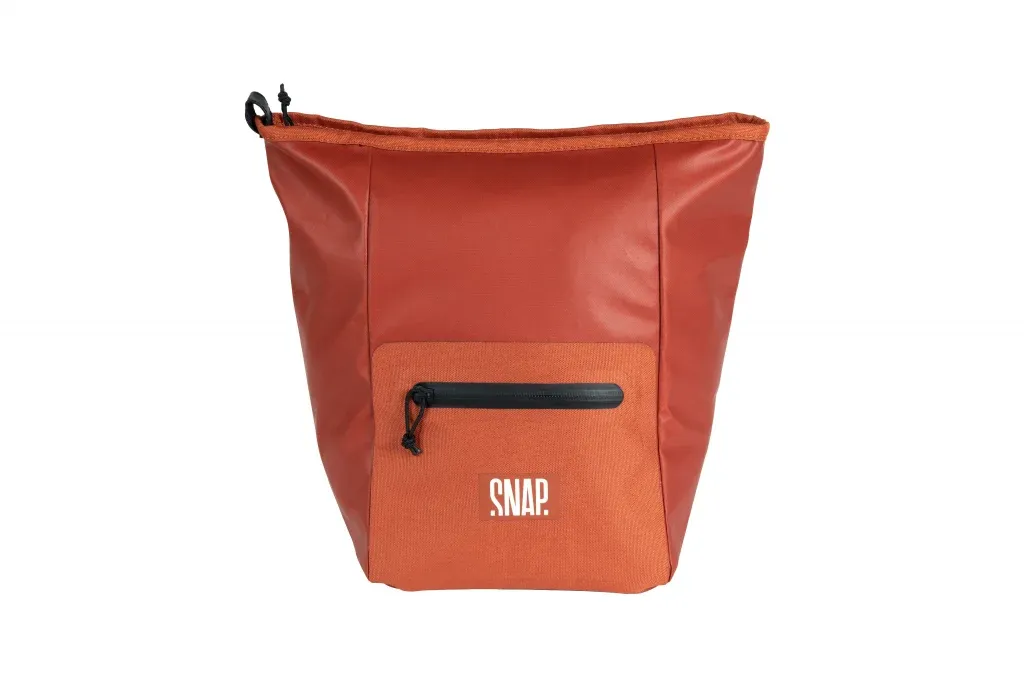
A standard bag aims for lightness and quick access on the road. It is carried on the shoulder, does not interfere, but it tends to crash and limit access if you recharge frequently. The big chalk bag aims for stable opening, better accessibility, and comfortable use on the ground in a block.
The bucket (often larger and more stable) is intended as a «base on the ground». It accepts brushes, sometimes accessories, and is often more comfortable for long sessions. In return, it is generally less portable, and less versatile once you leave the block.
In practice, the big chalk bag sits between the two: more stable than a standard bag, more mobile than a bucket. It’s often the right compromise if you alternate between carrying a backpack and going outside with a crash pad.
Use cases: long block, aisle, room
In a long block (lots of sprints, little rest), the wide opening saves time. You recharge quickly, even when your fingers are swollen. The bag must stand upright, resist the ground, and remain accessible without tipping over near the crash pads.
In this case, the challenge is different: you want access to a handhold without the bag pulling on your waist. If you carry a large bag, you need to control its stability and position; otherwise it gets in the way at the hips. Many climbers choose a large bag for the ground-handling phase, then a smaller bag on the harness.
In the workplace, the priority becomes dust management and habits. A well-closing bag prevents the locker room from being dusty. A bag that is easy to clean prevents the installation of a white film on everything you touch.
Flux: Wide and rigid opening → hand entering without searching → magnetism distributed by the lining → edge that limits loss → closure that ensures transport → bag placed stably on the ground → rapid resumption of testing.
If your main practice is the block, prioritize ground stability + anti-leak closure.
If your main practice is the bowstring route, prioritize positioning with the bowstring + access to a hand.
If you mainly clean the room, prioritize easy cleaning + anti-dust routine.
The big chalk bag is a compromise: more stable than a standard bag, more mobile than a bucket.
Your dominant usage (block, lane, room) should determine the format, not the other way around.
Ground stability is an advantage only if the closure follows.
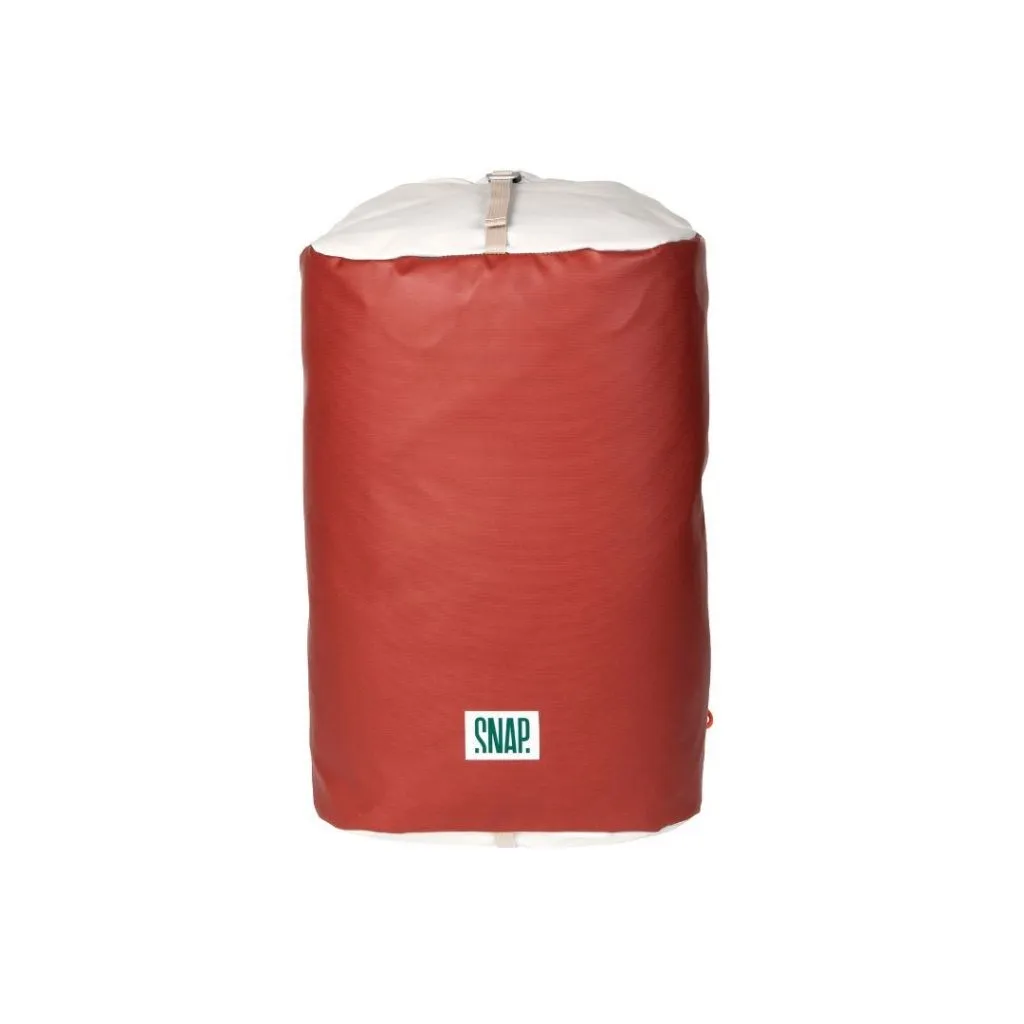
After the format, the real question becomes: what capacity and what dimensions provide fluid access to your hand, without slowing you down?

Ideal capacity: adjust the volume to your hands and sessions
Measuring your hand: useful depth and diameter of access
The «right size» is the one that allows you to insert your hand without twisting your wrist, and then pull it out without snagging the edge. Don't just think in terms of volume. Think in terms of ergonomics: access diameter, edge rigidity, and useful depth.
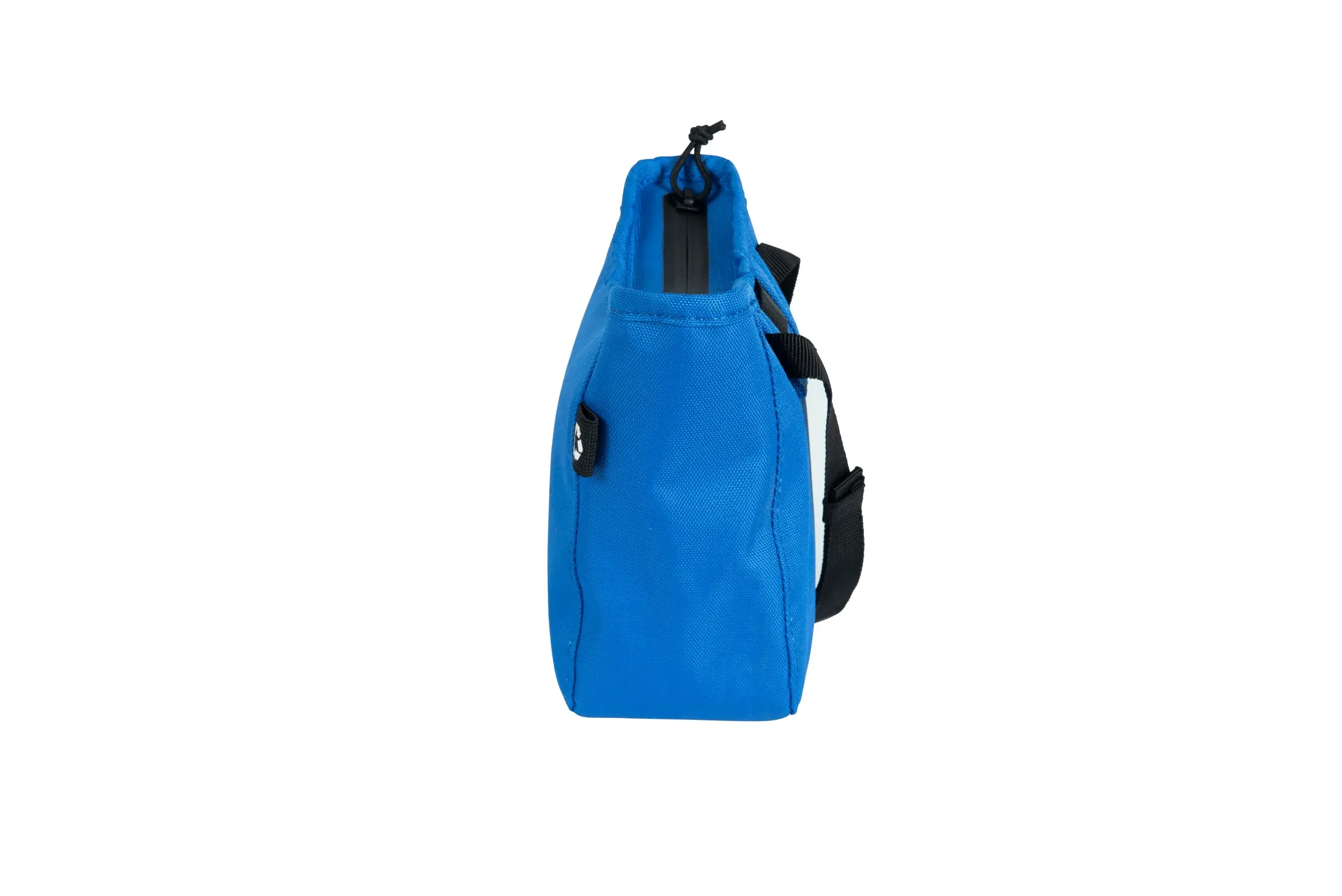
Simple test ground: open hand, fingers slightly apart; you should be able to reach down to the first phalange without feeling any pressure on the thumb. If you have to «aim» at the opening, it is too small or too flexible. If your forearm touches the edge every time, the depth is not properly proportioned for you.
The useful depth must allow for quick recharging without digging too deep. If you have to stir for a long time, you lose momentum and dust gets suspended in the air.
Autonomy without obsession: rare refills, proper use
The capacity should cover your typical session, not your exceptional days. The more you store, the more dust you transport. The more you transport, the more the closure becomes critical. Outdoors, a large reserve can be logical if you are hiking, if the rock dries out, or if you are sharing the pack.
In the store, autonomy is less of an issue than control. A bag that is too full overflows on the first shock. A reasonably full bag forces you to use more precise handling, and limits the «cloud» when you put your hand back in.
The right compromise: enough reserve so that you don't have to worry about magnésium, but not so much that your bag becomes a powder transport bag.
| Profile | Recommended opening | Recommended depth | Warning point |
|---|---|---|---|
| Small hands | Large but well insulated | Moderate, easy to reach | Avoid putting the bag too deep |
| Big hands | Very open and rigid | Deep, without a clear end point | Monitoring the edge rubbing |
| Sensitive skin | Soft edge, no aggressive stitching | According to the hand, comfort comes first | Avoid excessive rigidity |
Opening adjustment: quick access without loss of power
On a large bag, the opening adjustment is your main lever. Too open, you lose every movement; too closed, you scratch the edge and lose focus. Look for an opening that remains circular, with a sturdy edge, and then a closure system that operates with a single action.
If your bag has a adjustable handle, adjust it at the moment of warming up. For safety, keep the opening wider and stable. When transporting, close the bag tightly. On the road, reduce the opening if the bag tilts, to avoid the magnetic rain on your feet.
Well-thought-out settings allow you to stay precise, especially when your fingers get hot and you just want to «recharge and go again».
The useful capacity is judged by access, not by the displayed volume.
A rigid opening saves time and limits dust, if it is properly adjusted.
Closed transport, open use: never mix the two modes.
When size is right, durability and comfort become the priority: a large bag sits on the ground, rubs, absorbs shocks, and must remain comfortable on the skin.
Materials: external durability and interior comfort
Inner lining: attachment, distribution and feel
The liner is your interface with the magnetics. A soft liner holds the powder, distributes it, and prevents empty pockets. It also gives a more homogeneous feel to the touch. Conversely, an interior that is too smooth leaves the magnetics sliding to the bottom, and forces you to stir.
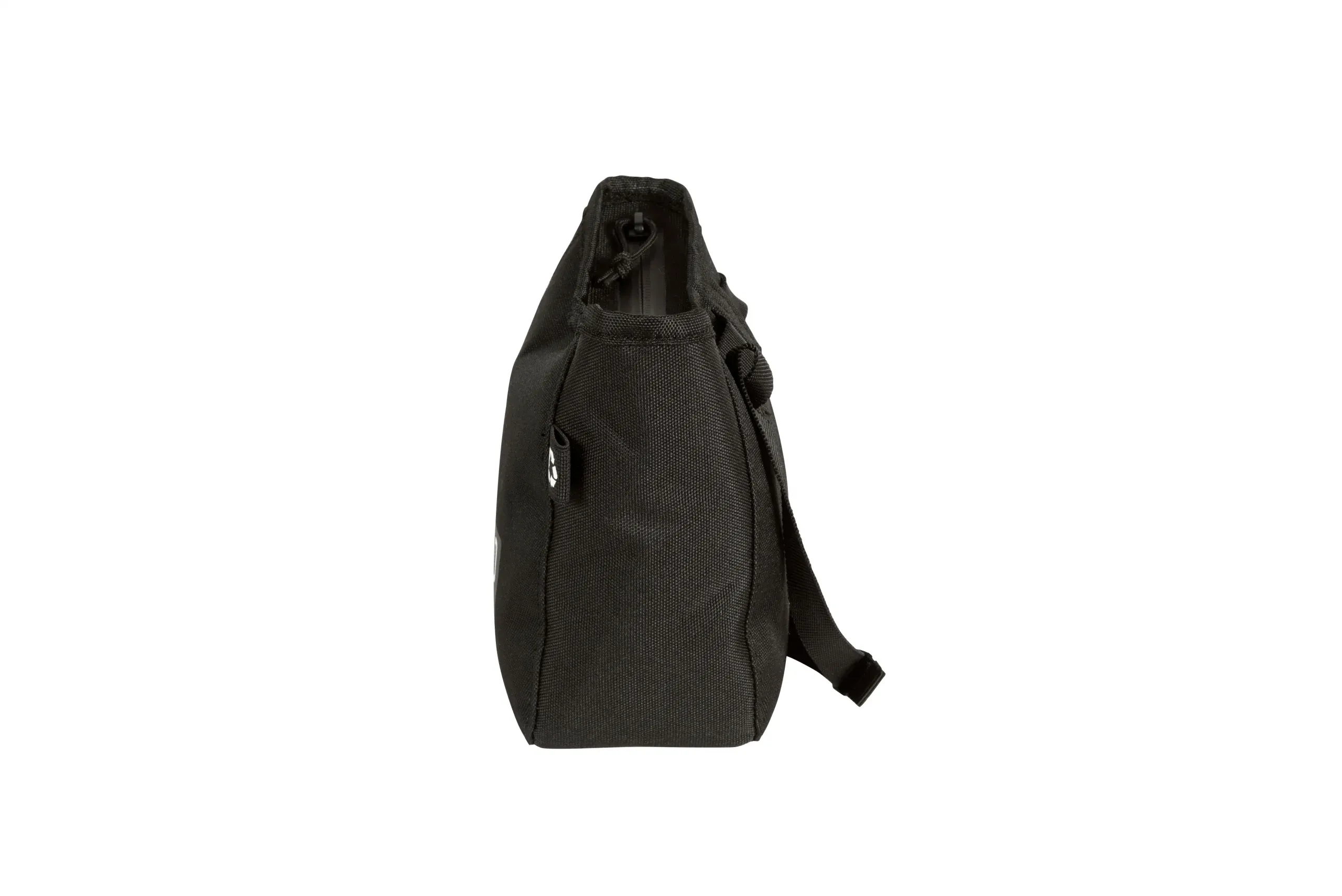
In the long term, the lining also affects maintenance. A lining that soaks up moisture too quickly becomes a mixture of magnetism, dust, and micro-particles from the connectors. This changes the texture, and can irritate sensitive skin.
Your test: after a few sessions, see if the magnetism spreads or if it clumps together. If you see «blocks,» it’s often a combination of moisture + an interior texture that isn’t suited to your use.
Outer textiles: nylon, cotton, coating, leather
The exterior must withstand the abrasion of rocks, carpets, and the room floor. Typical technical fabrics such as nylon are well-suited; they dry quickly and are easier to clean. Cotton can be pleasant and aesthetically pleasing, but it marks more quickly and absorbs more.
On a bag designed to be block-free, a TPU coating provides real benefits: it limits absorption, simplifies cleaning, and helps keep a bag clean when it's dragged around by blocks. Leather, on the other hand, can be durable but requires proper maintenance and can become rigid if stored poorly.
Don't just choose by touch. Imagine your bag lying on dusty ground, then stacked in your back bags: if the fabric catches dirt, you carry it everywhere.
Abrasion, skin, allergies: the details that make the difference
Sturdiness should not come at the expense of comfort. On a large pack, the critical areas are the seams at the edges, the rigid reinforcements, and the attachment points. If a seam rubs, you will feel it after a long session, especially on the trail.
If you experience skin reactions, opt for stable inner materials and avoid treatments for which you do not know the long-term effectiveness. A «clean» bag is also one that irritates less: less embedded dust, less rubbing.
When it comes to durability, look for items that can be repaired: a replaceable strap, accessible seams, fabric that doesn’t tear even in the slightest impact. A durable bag is a choice of simplicity, and it will reduce your future purchases.
The lining determines the sensation and regularity of magnetism on the fingers.
An exterior that is easy to clean keeps your equipment cleaner, especially when stored in a batch.
Durability comes from critical areas: edges, seams, fastenings, reinforcements.
Solid material is not enough if the closure lets the powder escape: that is the number one weak point during transport.
Leak-proof closures: keep the magnet in the bag, not in your belongings
Simple cord, rolled closure, magnets: what you need to understand
The cord is quick and lightweight. It fits well in a standard bag, but on a large volume, it can leak if the bag is turned over. The rolled closure is more protective: you roll it up, compress it, and reduce the volume of air that carries the dust. It is well suited for approaches and transport in a bag.
The magnetic closures offer a large opening and a simple gesture. They are comfortable to use, but they can open in the event of a shock, and attract fine dust onto the contact area. If you often carry your bag with metal equipment, check that nothing forces the opening.
Finally, the presence of a scratch can quickly secure the lock. But a dirty scratch loses its effectiveness. It must be cleaned, otherwise it becomes a false lock.
Home test: shaking, overturning, transport
Don’t rely on the in-store experience. Take a simple test: close the bag, turn it over, shake it on a surface that is easy to clean. If you see fine rain, then your closure won’t hold up in real life.
Next, test the most common scenario: bag in a backpack, stuck between a jacket and a mat. After transport, gently open it. If a cloud comes out, your closure does not limit the dust in confinement. This is a clear sign.
This test avoids the most common disappointment: a bag that is pleasant to use but disastrous to transport.
| Closure | Advantage | Failure | Ideal use |
|---|---|---|---|
| Cordon | Fast, simple, lightweight | Limited protection if returned | Path, a frequent use |
| Roller closure | Very good control of leaks | Gesture a little longer | Block, transport, approach |
| Magnets | Wide opening, fluid gesture | Risk of opening in shock | Block, room, quick access |
Transport is the peace officer: an anti-leak bag saves you time and keeps things clean.
The rolled closure is often the most reassuring for large volumes.
Clean the scratch regularly; otherwise it becomes decorative.
Do you want to apply this method? Perform your shock/tilting test before validating your bag.
An effective closure must remain comfortable to wear: the belt, the fasteners and the position will determine whether you keep your bag the entire session.
Carry-on: belt, brush holder and useful pockets
Adjustable belt: stability, compatible with the chest strap
A stable belt prevents the bag from rotating, especially when you move around a lot in a row. Look for a strap that adjusts finely and does not become loose from friction. If you climb with a harness, check the compatibility: the bag must remain accessible without getting caught in the buckles or the equipment carriers.
On a big chalk bag, the position is often lower and more «lateral» than a trail bag. Too centered on the back, you’ll have trouble aiming. Too far in front, it interferes with hip movements, especially in stride or compression.
For sensitive people, the choice of the belt changes everything. A strap that is too thin can pinch. A strap that is too wide can interfere with breathing during exercise. Find the balance, and test it in a moving situation, not a static one.
Pockets, brush holder, support: organize without adding weight
Pockets are useful if they prevent you from having to take the backpack out to get a key, a bandage, a plaster, or a map. But they should not make the backpack «square» and rigid. A backpack that is too heavy becomes unstable on the ground and uncomfortable to carry.
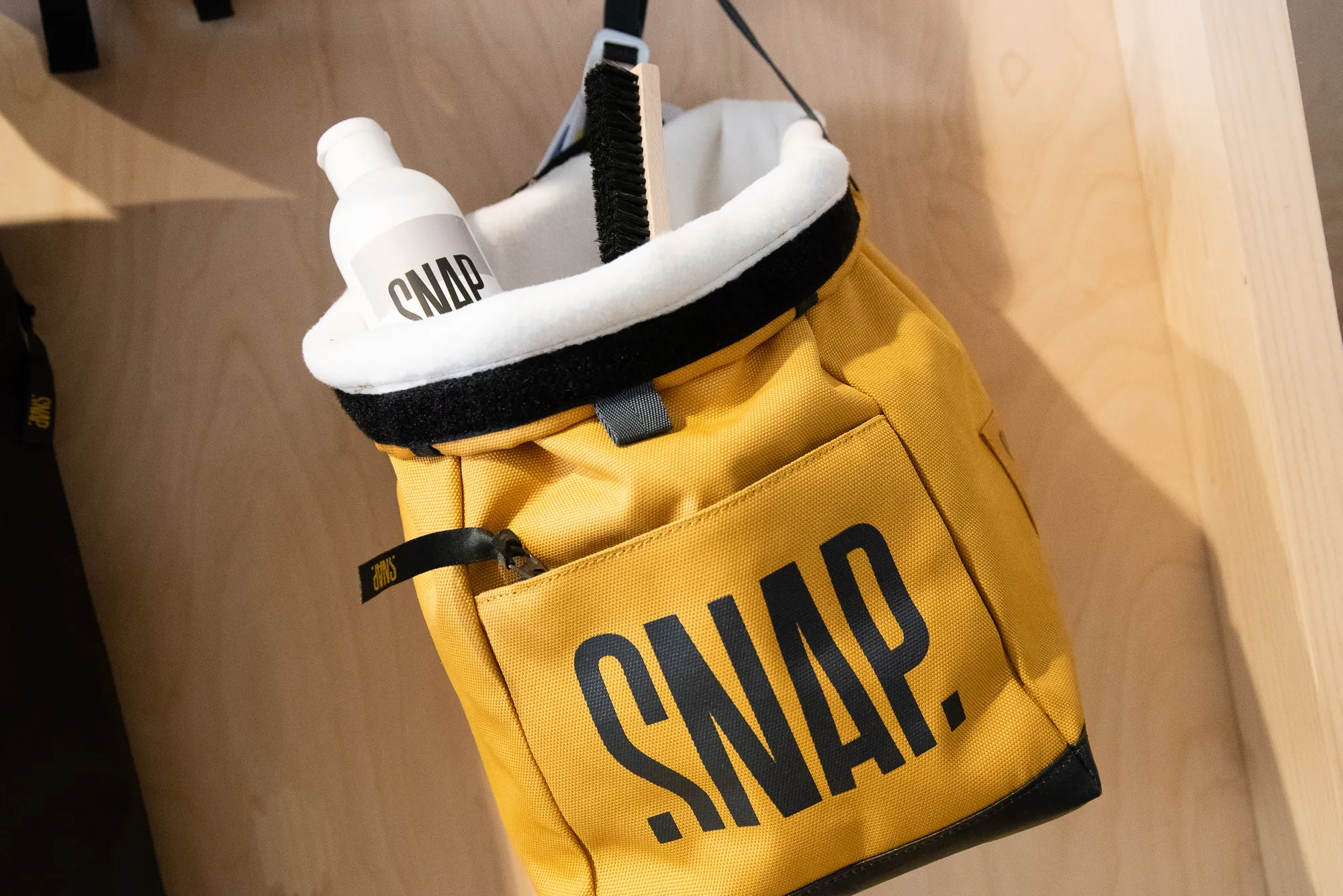
The brush holders are worth gold in bulk: the more you brush, the cleaner you get. Check the orientation: you must grab the brush with a natural gesture, without looking, and put it back without dropping it. The hold must hold even if you place the bag on its side.
A good bag is one that makes you feel more fluid. Organization should serve you, not distract you.
Optimal positioning: hip, back, forearm depending on the context
As a rule, many people place their bags on the ground. But between two attempts, carrying them is important: dominant hip, slightly to one side, to keep your hand free and have direct access. On the trail, the position is more centered, but not too high, to avoid hitting the harness.
On certain passages, you can even temporarily switch it off to avoid a snag. The idea is not to be «academic»; it’s to be effective. Your bag should disappear from your attention.
If you are using very low blocks, also think about the snagging: straps, loops, and knots. Anything that protrudes can snag a socket or a bush on approach.
The belt must prevent rotation: this is the basis for quick access.
The useful brushes are the ones you use without looking.
The simpler the organization is, the more focused your climbing remains.
Once the backpack is well worn, you can fine-tune it according to your discipline, because the constraints are not the same in the backcountry, on the trail, or in the mountains.
Optimize use: block, trail, large trail, mountaineering
Block: ground stability, anti-tip, immediate access
As a whole, your bag lives at the foot of the passage, in contact with the ground, the carpets and the pebbles. Stability is therefore a key criterion. A wide base and a shape that remains upright avoid the classic scene: the bag upside down, the magnet lost, the session ruined.
A rigid edge also helps: you can recharge without having to search for it, even when you’re exhausted. But be careful with too aggressive edges if you dip your forearm into it. Comfort should remain constant, even at the end of the session.
Finally, manage the environment: keep the bag away from the drop zone, and avoid placing it on an unstable surface. A stable bag reduces losses, and therefore also reduces pollution on the ground.
Path: accessibility to one hand, mobility, anti-leakage
The rule is simple: one hand, one gesture. If you have to contort yourself, the bag slows you down. The big chalk bag can work if the opening is well secured and the harness position remains stable.
Mobility is the other issue. A bag that is too rigid can hinder your movement of the hips. A bag that is too bulky can push you away, therefore losing access. Look for a belt adjustment that limits swinging.
The closure must remain reliable, because transporting the rope and the climbing bag exposes the bag to twisting. Without a proper closure, you lose magnetism and you get your climbing bags dirty.
High altitude trails and mountaineering: autonomy, cold, humidity
With autonomy becoming increasingly useful, especially if you are on the relay for a long time. But organization takes over: you must be able to close quickly, clean up properly, and avoid turning the relay into a powder-filled area.
In mountaineering, cold and humidity change everything. With gloves on, the opening must remain accessible. The closure must remain manageable and reliable. A backpack that opens all by itself in a backpack becomes a problem, not a comfort.
If you’re traveling light, a large bag can be oversized. The right choice is one that remains functional when you’re tired, not the one that impresses at first glance.
Block: prioritize ground stability + rigid edge + reassuring closure.
Way: Choose access to a hand + belt that limits swinging.
Mountaineering: prioritize maneuverability + reliable closure + a routine that is familiar to the relay.
The same bag can be used everywhere, but only if you adapt the carrying and opening system.
As a whole, stability prevents losses and bad sessions.
In the mountains, closure and maneuverability take precedence over comfort «in ideal conditions».
Do you want to apply this method? Note your settings (belt, opening, position) according to the discipline, then repeat them.
The most underestimated subject remains the dust in the room: it impacts comfort, cleanliness, and breathing, and a large bag can worsen or reduce it depending on your habits.
Dust in the room: current practices and breathing
Understanding the dust: what the measurements say
Magnets improve adhesion, but they also generate suspended particles, especially when handled frequently. Measurements published on indoor exposure report very high concentrations of particles, with values of coarse particles up to 4000 µg/m³ and fine particles up to 500 µg/m³ in indoor climbing environments.
To help you orient yourself, the recommendations of the World Health Organization propose a level of fine particles over twenty-four hours: 15 µg/m³ and an annual level of 5 µg/m³ as guiding values.
You don’t need to be anxious to be pragmatic. The goal is simple: reduce the actions that cause dust to be suspended, and improve the cleanliness around you.
Concrete actions: ventilation, brushing, wiping
Your best action is routine, not «all or nothing.» Brush before recharging, not after. You avoid turning your bag into a dust container. Wipe your hands if they are wet, then apply the magnetics: moisture causes adhesion, so you put more on, and therefore you lose more.
Always close the bag when you’re not using it. That’s the difference between a bag that stays discreet and a bag that makes a mess of the entire locker room. If you’re climbing in a group, place the bag out of the passageways: fewer bumps, fewer clouds.
Regarding collective management, the sector observatory reports a nearly stable level of attendance, with only + 0,2 % in private theaters over a specified period: this forces many theaters to work on the experience, including cleanliness and air quality.
Choice of magnesia: powder, pellets, liquid depending on context
The powder gives an immediate sensation, but it flies away. The beads can limit suspension, but they are not suitable for everyone. Liquid magnium can reduce dust emission during application, and a publication dedicated to reducing exposure reports levels comparable to a powder ban under certain usage conditions.
The often effective compromise: liquid magnésium as the base, then a light contact with the powder in the bag, only when necessary. You maintain the adhesion, and you reduce the cloud.
| Background | Recommended practice | Objective |
|---|---|---|
| Frequent visited room | Close between trials, systematic brushing, liquid base | Limit ambient dust |
| A rarely visited room | Small amount of powder, hand wiping, strict closure | Maintaining comfort without clouding |
| Exterior | Controlled powder, stable positioning bag, closure for transport | Avoiding losses and marks on the ground |
The dust depends mainly on your actions: brushing, wiping, closing, and placement.
A liquid base and then a light touch to the powder often reduces the cloudiness.
Your bag must close quickly, otherwise you won't be able to do it.
Now it’s time for validation: a large bag is also chosen through trial and error, using simple and reproducible criteria.
Validation in the field: test it before adopting it
Simple protocol: accessibility, leakage, comfort, stability
Always test in realistic conditions. Block out the bag on the ground, then perform several cycles: recharge, close, move, recharge. Check the stability when you pull out the brush, when you replace the bag, and when you touch it while returning to the mats.
While you’re at it, test access to one hand. Simulate a movement where the other hand holds a grip. If you have to contort yourself, the position is incorrect. Adjust the belt, then start over. A good setting is found, but it must be reproducible.
In transportation, repeat the reverse test. This is the most honest filter. A bag that leaks is a bag that will waste time cleaning, both at home and on a road trip.
Success indicators: dry hands, rare refills, clean session
Your main indicator is the sensation of the skin. You should feel a regular grip, without any excess thickness. If you feel like you’re «stuck,» you’re putting too much pressure, or the lining is not distributed properly. If you have to recharge every few minutes, the opening or access is not good, or you’re using a magnet that isn’t suitable.
Also look at the environment: a good bag and a good routine leave little trace. If your trousers, forearms and carpet quickly become stained, you’re wasting more than you use.
Finally, psychological stability matters: if you think about the bag, it means that it takes up too much of your attention. The right bag disappears.
| Common problem | Probable cause | Quick correction |
|---|---|---|
| The bag topples to the ground | Base too narrow, load distribution poor | Reduce the filling, choose a more stable base |
| Magnets everywhere in the transport bag | Insufficient closure, bag returned | Adopt rolled-up closure and close it systematically |
| Difficulty entering the hand | Flexible opening or too tight | Increase the edge stiffness, adjust the setting |
| Irritation in the wrist | Aggressive edge, protruding stitching | Change the model, smooth out the usage, avoid excessive rigidity |
Routine after a session: empty, close, and clean transport
Your bag lasts longer if you treat it like equipment, not as a pocket. After a session, first close it, then wipe the outside with a cloth. Only then should you store it. This prevents dust from accumulating on your bags, backpacks, and clothes.
If you climb outside, remove the small pebbles that accumulate in the folds. They damage the seams and scratch the fabric. Also check the scratch areas: a dirty scratch no longer holds and becomes a source of leakage.
For technical storage, choose a dry place without unnecessary compression. A constantly crushed bag loses its shape, and therefore its quickness of use.
Test how you climb: on the ground, in motion, and while transporting.
A proper session depends as much on the routine as on the bag itself.
Close and wipe: that’s the simple duo that changes everything.
After the practice, there are still questions that always come up about large formats, especially when you’re torn between a bag and a bucket.
FAQ: large format magnesia bucket and big chalk bag
What is the difference between a magnesia bucket and a big chalk bag?
The bucket is designed as a base on the ground: very stable, very accessible, often more «logistical». The big chalk bag seeks the compromise: sufficient stability in a block, but possible carrying and easier transport. If you move around a lot between sectors, the big chalk bag is often more convenient. If you stay in the same place for a long time, the bucket gains in comfort.
What size should I choose if I have large hands and long sessions?
Choose the opening first, then the useful depth. Your fingers should enter without aiming, and come out without snagging the edge. For a long session, opt for a liner that distributes well and a closure that holds up in transport. If you keep refilling constantly, it’s often a problem of access, not just capacity.
How to fill it without creating a cloud of dust?
Answer the method: bag placed stably, filling slowly, close to the bottom, then immediate closure. Avoid pouring from the top. If you use very fine magnésium, pour a small amount and wipe the outside before storing. In a room, a liquid base of magnésium before the powder often reduces the suspension.
How to clean the lining without damaging it?
Start clean: empty, tap gently, then brush the lining without pulling it off. Then, a light cleaning: a damp cloth on the outside, and complete drying in the open air. Avoid saturating the lining with water: you are gluing the magnet, you are changing the texture, and you are prolonging the drying time.
Can I use a big chalk bag for crossfit or bodybuilding?
Yes, if you accept the bulkiness and if the closure is reliable. The big advantage is the wide access and stability, useful on a box floor. The point of vigilance is cleanliness: close between sets, wipe the outside, and avoid fine powder if the space is confined. A bag that leaks quickly soaks the equipment.
What is the main risk if I choose a bag that is too large?
The risk is not just volume: it’s the loss of control. A too-large bag is more likely to tip over, leak more during transport, and lead to overfilling with magnésium. The result: more dust, more cleaning, and often more irritation. A large bag must remain stable, closable, and easy to handle.
After these responses, it remains to decide quickly and make your bag last: that’s where the method becomes profitable.
Choosing and using sustainably: criteria, decision-making, maintenance
Priority criteria: opening, closing, comfort
If you could only keep three criteria, keep the ones that change the session. First the opening: it dictates your pace. Then the closing: it dictates the cleanliness of your transport. Finally, comfort: seat, belt, and absence of friction.
Options like pockets and brush holders are useful only if they do not compromise stability. Fabric variations are interesting, but they do not mask a poorly designed opening or an aggressive edge.
A good method: choose ergonomics first, then everything else. A comfortable and clean bag will make you climb higher, because it removes everyday irritations.
Decision tree: practicality, ability, carryability
- You mostly do block Ground stability, anti-leakage closure, easy brushing, fabric easy to clean.
- You mainly do the road work : access to a hand, stable belt on the harness, volume that does not interfere with the pelvis.
- You alternate between the indoor and outdoor spaces : anti-dust routine, reassuring closure, durable and washable exterior.
For online purchases, also look for trust elements: return policy, privacy, privacy policy, cookies, and legal notices. If you are reading reviews, prioritize those that resemble your own usage, with a verified user type like snap climbing rather than vague comments.
If you are looking for a promo code, use it as a bonus, not as a selection criterion. A poorly suited bag remains a bad purchase, even if it is cheaper.
Mistakes to avoid + maintenance plan
Classic mistake: over-dimensioning for «just in case», then suffering from leaks. Another mistake: ignoring the closure, then looking for a cover or a secondary bag. A third mistake: never cleaning it, and ending up with a bag that gets all dirty.
Simple plan: empty regularly, shake gently outside, clean the outside with a cloth, and let it air dry. Store the bag closed, but not compressed at the bottom of a bag. A sturdy bag lasts because you treat it like equipment, not like a consumable.
And if you like learning through images, a YouTube search for filling and closing routines can help you develop proper hand movements, especially in the classroom.
Finally, don’t forget the rest of your system: an inflatable crash pad, crash mats, and classic crash pads do not impose the same cleaning requirements during transport. Adapt your routine to your equipment.
Decide based on three criteria: opening, closing, and comfort when carrying the baby.
Pockets and accessories are only of value if they do not detract from the stability and cleanliness of the product.
Minimal and regular maintenance is better than a big cleaning every now and then.
You don’t need the «bigger bag»: you need a bag that keeps you in rhythm, that really closes, and that remains comfortable in everyday use. By choosing a stable opening, an anti-leak closure, and materials that are easy to clean, you gain fluidity, cleanliness, and consistency on the pitches. Perform a simple test (ground, movement, transport), then lock in a short maintenance routine. The big chalk bag then becomes a discreet ally, exclusively at the service of your climbing.
 Français
 English (UK)